Paver maintenance, at a glance
Maintain pavers by clearing debris, addressing spills, checking joints and drainage, and choosing cleaning or sealing treatments suited to the material. Regular attention supports curb appeal and helps you spot problems early. Sealing is optional and surface-specific; it does not replace ongoing care.
Why paver maintenance matters
Your driveway, patio, pool deck and walkways work hard every day. They carry vehicles, collect fallen leaves, catch sprinkler overspray and provide the setting for everyday life outdoors. Paver maintenance is the ongoing care that keeps those surfaces clean, helps preserve their appearance and brings developing problems to your attention.
For homeowners in Pinellas and Pasco Counties, it helps to think beyond a single cleaning appointment. A useful plan includes removing debris, treating spills promptly, checking joints, watching how water drains and making informed decisions about sealing. Each task addresses a different part of the installation.
Protect curb appeal without overlooking condition
A clean entry makes a home feel cared for. But appearance is only one reason to maintain pavers. A walk across the driveway can reveal a loose edge, a low spot or sand washing out of the joints. Finding those changes early gives you the opportunity to ask about the cause before scheduling cosmetic work.
Make future care more manageable
Small, regular tasks are easier to keep up with than an occasional major cleanup. Sweep away leaves before they break down. Note new spots while you remember what caused them. Save the name of any sealer used. These simple habits help you give a cleaning professional useful information and avoid repeating an unsuitable treatment.
Maintenance does not guarantee that pavers will never stain, settle or need replacement. It is a way to care for the surface you have and make better decisions about its upkeep.
What to watch for around a Florida home
Start with your own property rather than a one-size-fits-all schedule. A shaded walkway beneath trees may need attention sooner than an open patio. A driveway used daily has different concerns from a courtyard used on weekends. Walk the area after ordinary rain and again after a heavier storm to see what changes.
- Shaded, damp areas: look for green or dark surface buildup and note whether the area stays wet after the surroundings have dried.
- Landscape edges: check for mulch, soil and leaf debris moving onto the pavers.
- Sprinkler zones: note repeated overspray and discoloration near individual heads.
- Vehicle and cooking areas: look for fresh oil, grease or food spills so they can be addressed promptly.
- Downspouts and runoff paths: check whether concentrated water is washing material out of the joints.
If the same problem returns quickly after cleaning, mention the pattern. Cleaning may address the visible buildup, while irrigation adjustments, landscape maintenance or a drainage assessment may be needed to address the recurring conditions.
Know your pavers before choosing a treatment
“Pavers” describes a range of materials and installation systems. Before applying a cleaner or sealer, identify the surface and any existing finish. If you do not know the product, look for an installation invoice, leftover pavers or the name of the original installer. Clear photos can help start the discussion, but they may not establish the exact material or coating.
| Surface | What to confirm |
|---|---|
| Concrete pavers | The manufacturer's care instructions, existing sealer and whether white deposits need separate evaluation. |
| Clay brick pavers | Whether the proposed cleaner and finish are approved for that particular brick. |
| Natural stone, including travertine | The stone type and a compatible cleaning system; do not assume a concrete-paver product is suitable. |
| Permeable paving | The specified joint aggregate and maintenance method that preserves the system's drainage function. |
| Previously coated or factory-finished pavers | The existing finish and whether additional treatment is appropriate or compatible. |
For any unfamiliar treatment, a small, inconspicuous test area is a useful starting point. Evaluate the result after the surface has dried. An acceptable wet appearance alone is not enough to judge the final color or finish.
Build a sensible paver cleaning routine
1. Remove loose debris
Sweep with a suitable broom and collect leaves, twigs and loose dirt. Pay attention to corners, furniture legs and planting beds where debris accumulates. Avoid deliberately pushing waste into joints or drains. Keep the task simple enough that it becomes part of your normal yard care.
2. Address new spills promptly
Blot or absorb a fresh spill instead of spreading it across the paving. Identify the substance before choosing a cleaner, then follow a product approved for the material and existing finish. Record what spilled and when if you need professional help. Deep or old staining may not disappear completely, even with appropriate treatment.
3. Match cleaning to the problem
General dirt, organic growth, oil and rust-colored marks are not interchangeable. Avoid trying several unrelated chemicals in succession. Ask which cleaner is intended for the stain, how nearby surfaces will be protected and what result is realistic. Keep people and pets out of the work area according to the product instructions.
4. Use pressure with care
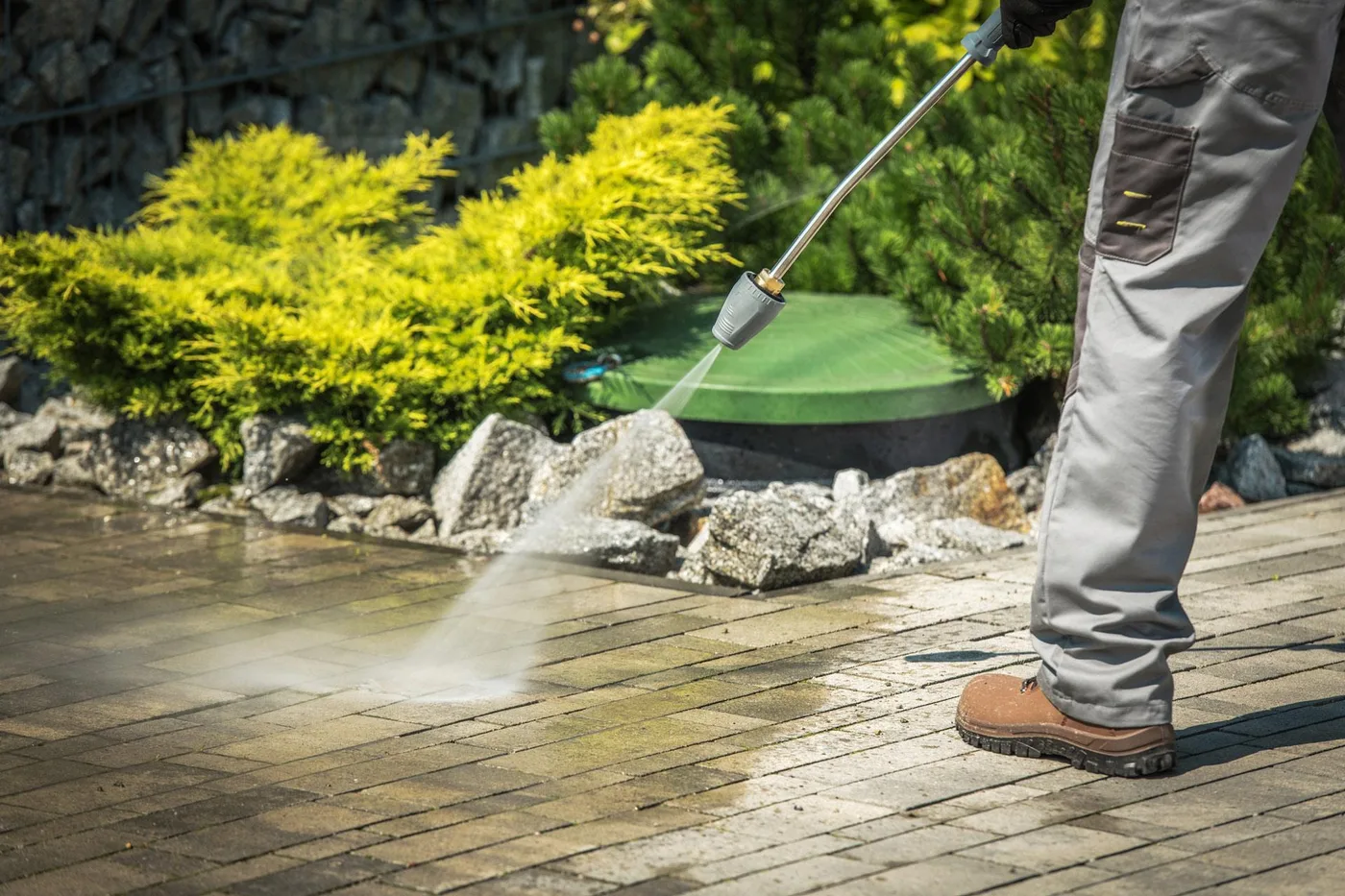
Aggressive washing is not a shortcut to a better result. The combination of equipment, nozzle, distance, technique and paver condition matters. A concentrated stream can disturb joint material or leave an uneven appearance. If joints are already low, pavers are loose or the coating is failing, have those conditions evaluated before a full cleaning.
Professional cleaning should include a plan for the surrounding property as well as the pavers. Discuss adjacent doors, painted surfaces, landscaping and where rinse water will go. Ask about any preparation you should complete before the appointment, such as moving furniture or vehicles.
Read about our paver cleaning and sealing services or driveway and paver cleaning when you are ready to discuss a specific area.
Check joint sand, edges and drainage
A paver surface is an installation, not just a collection of individual blocks. During your routine inspection, look across the whole area and pay particular attention to joints, borders and changes in level.
What low or uneven joints can tell you
Make a note of visibly empty joints, loose material collecting nearby, or gaps that appear to be changing. Ask whether the joint material needs replenishment and whether water flow or another condition is contributing to the loss. Do not assume a bag of ordinary sand is the right answer for every installation.
If polymeric sand is proposed, the product must suit the joint dimensions and installation. Preparation, removal of residue and activation should follow that product's instructions. For a permeable system, confirm the specified aggregate rather than substituting a joint treatment intended for conventional paving.
Cleaning does not correct settlement
A rocking paver, spreading border or depression that collects water deserves a separate assessment. Cleaning and sealing cannot rebuild a failing base or change the installed slope. Ask whether a paver installer or repair specialist should evaluate movement before you invest in a new finish.
Photograph persistent puddles and note how long they remain. This is more useful than describing the area only when it is dry. Also note whether the issue began after landscape work, a change to downspouts or an unusually heavy storm. Share observations without assuming the cause.
Does every paver surface need sealing?
No. Sealing is a product-specific choice based on the paver, existing treatment, exposure and desired appearance. Some owners prefer the natural look of unsealed paving; some surfaces already have a factory treatment. A consultation should establish whether sealing is suitable before selecting a finish.
On appropriate surfaces, a compatible sealer can make stain cleanup easier and may enhance color. Some products also help stabilize joints. Those benefits depend on the actual product and application; sealing does not eliminate sweeping, spill cleanup or future inspection. CMHA's hardscape maintenance guidance discusses these benefits and the importance of preparation and compatibility.
Ask about the finish you will actually get
“Sealed” does not always mean shiny or wet-looking. Ask about color enhancement, sheen and suitability for the way you use the area. Around a pool or any frequently wet walkway, discuss wet-surface traction and whether the proposed system is appropriate. A test area helps set expectations.
Preparation and timing come first
Previous coatings, stains, moisture and white deposits need attention before another application. A cloudy or peeling finish should be diagnosed, not simply covered. Tell the contractor the previous product name if you have it, and ask whether stripping or other preparation is included.
Cleaning, drying, joint work and sealing must follow the selected system's requirements. Weather, irrigation and return-to-use instructions matter. Get separate guidance for walking, parking vehicles and replacing furniture rather than assuming everything can return at the same time.
Reseal according to condition and product guidance
There is no universal resealing interval for every Florida driveway or patio. Keep the application date and product information, follow the manufacturer's maintenance instructions and arrange an inspection when wear or a change in appearance develops. More sealer is not automatically better.
What does a white haze on pavers mean?
A pale or chalky deposit may be efflorescence: salts carried to the surface as moisture moves through cement-based materials. It is different from ordinary dirt. White cloudiness can also involve an existing coating, so appearance alone is not enough to choose a treatment.
Do not rush to seal over a white deposit. Ask whether it is efflorescence, coating trouble or another issue, and use the paver manufacturer's guidance. Cambridge's efflorescence information is a useful background resource for concrete paving; the instructions for your own pavers and treatment take priority.
Take photographs when the surface is dry and record when the haze appeared. Was it shortly after installation, after a sealing job, or after a period of wet weather? That history can make an evaluation more productive.
A practical paver maintenance schedule
Use this as a starting checklist, then adjust it to your property. These are inspection and housekeeping suggestions, not a requirement to pressure wash or reseal on a fixed calendar.
| When | What to do |
|---|---|
| Weekly, or as debris collects | Sweep leaves and loose dirt. Check shaded corners and planting edges. |
| After a spill | Absorb the excess promptly, identify the substance and select a compatible treatment. |
| Monthly | Walk the surface. Look for joint loss, weeds, movement, new stains and changes in the coating. |
| After heavy rain or landscape work | Check runoff paths, displaced joint material and areas of persistent standing water. |
| Before a professional treatment | Review the material, sealer history, repairs needed and written scope of work. |
| At least annually | Review your care records and decide whether a professional condition assessment is useful. |
| When the finish shows wear or problems | Ask about the existing coating before scheduling resealing; follow its manufacturer's guidance. |
Save a few dated photos of the same areas. Comparing the driveway entrance, a shaded corner and a typical joint over time can help distinguish a new issue from a longstanding appearance variation.
Paver maintenance mistakes worth avoiding
- Treating every dark mark alike. Identify the material and likely stain before selecting a cleaning method.
- Washing harder when a stain persists. Stop and reassess instead of repeatedly concentrating pressure on one spot.
- Sealing over a problem. Haze, loose joints and a failing coating need evaluation first.
- Ignoring drainage. Repeated sand loss or puddling can signal a problem that surface cleaning will not resolve.
- Buying a finish by appearance alone. Compatibility, expected wear and use of the area matter alongside sheen.
- Assuming every quote includes repairs and joint work. Ask for an itemized scope.
- Losing the product history. Keep the cleaner and sealer names with the work date and aftercare instructions.
The most useful question is often, “What does this particular surface need?” A good maintenance decision begins with condition, not a promise that one treatment solves everything.
Planning paver care in Pinellas and Pasco Counties
Whether your project is a driveway in Seminole, a patio in Clearwater or a walkway in New Port Richey, describe the space and your goals before requesting an estimate. Apple Roof Cleaning of Pasco & Pinellas can discuss your paver cleaning and sealing needs and confirm the scope it can provide.
Include your address, an approximate area, wide and close-up photographs, the type of paver if known, and any previous sealer information. Mention loose sections, persistent puddles or peeling before scheduling so those issues can be considered separately.
Ask the quote to distinguish cleaning, stain treatment, joint work, existing-coating preparation and sealing where applicable. Confirm what is excluded, how long the area will be out of use and what maintenance instructions you will receive. This makes it easier to compare the proposed work and choose a plan that fits your property.
Explore our service areas or request a free paver cleaning quote. For a conversation about your project, call (727) 277-2524.
Paver maintenance FAQs
How often should I clean my pavers?
Remove loose debris as it accumulates and address spills promptly. Plan deeper cleaning around the actual buildup, material and existing finish. A shaded patio and a sunny driveway may need different schedules.
Does sealing prevent all weeds and stains?
No. A suitable sealer may make stain removal easier, and some systems help stabilize joints, but sealing does not eliminate maintenance. Continue removing debris, checking joints and responding to spills.
Can pressure washing remove the sand between pavers?
It can disturb joint material, especially with aggressive technique or already depleted joints. Have the joints assessed and ask whether replenishment is needed and included in the cleaning scope.
Why are my pavers white after sealing?
Possible causes include a coating problem or deposits associated with moisture. Have the finish evaluated before adding another coat or trying a cleaner. Provide the sealer name, application date and dry-surface photographs.
Will cleaning fix sunken pavers?
No. Cleaning addresses the surface. Sunken, rocking or spreading pavers need an assessment of the installation and may require work by a paver repair professional.
How much does paver maintenance cost?
The area, access, material, stains, existing finish and preparation affect the scope and price. Request a property-specific quote that separates cleaning, joint work and sealing where applicable.
Do sealed pavers still need regular maintenance?
Yes. Follow the sealer’s care instructions, clear debris, handle spills promptly and watch for changes in the surface. Arrange a condition assessment before applying more sealer.
About this guide: Published by Apple Roof Cleaning of Pasco & Pinellas. General homeowner guidance; follow the care instructions for your specific pavers and products. Technical background: CMHA hardscape maintenance and Cambridge efflorescence guidance.