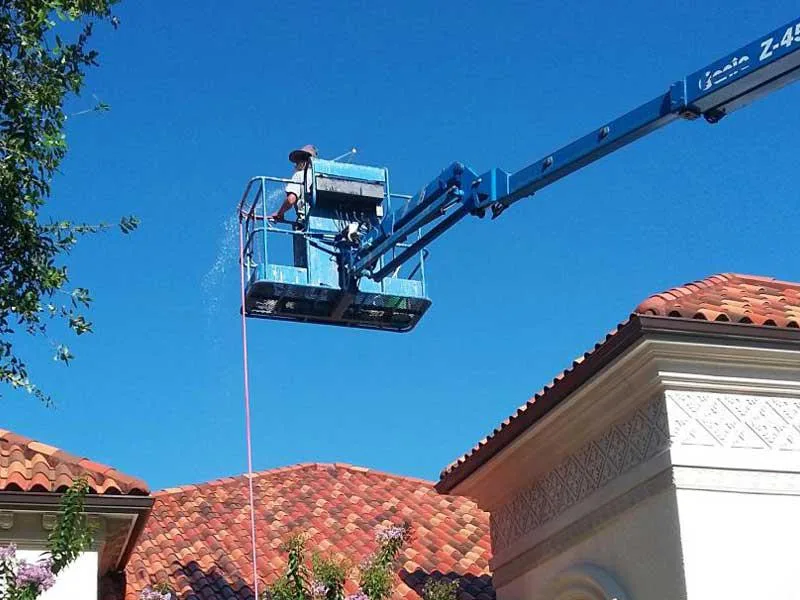
Which method is better for shingles?
Choose a properly selected soft wash process over high-pressure cleaning for asphalt shingles. Gentle application avoids aggressive scouring, allows an appropriate treatment to address algae staining and can follow roofing-industry care guidance. The roof’s condition, cleaning solution and workmanship still matter.
Soft wash vs. pressure washing: what is the difference?
Soft wash roof cleaning uses a cleaning solution and gentle application to address algae staining and other suitable organic buildup. The solution does the cleaning work rather than relying on a forceful stream to scour the roof. The right process depends on the roofing material, its condition and the manufacturer's instructions.
Pressure washing relies more heavily on the force of water to remove material from a surface. That approach may suit certain durable exterior surfaces when used correctly. Asphalt shingles are different: their exposed granules and overlapping construction make high-pressure cleaning an unsuitable choice.
Apple Roof Cleaning of Pasco & Pinellas uses soft washing because roof cleaning should improve appearance while respecting the roofing material. A roof is an important part of your home's weather protection, so the method matters as much as the immediate visual result.
There is also an important distinction between a service label and the work performed. Ask how the contractor applies the solution, whether a high-pressure tip or mechanical scrubbing will touch the shingles, and which manufacturer guidance the method follows. The words “soft wash” alone do not establish that a process is appropriate.
The roof-cleaning methods compared
| Consideration | Properly selected soft washing | High-pressure washing |
|---|---|---|
| How it cleans | Uses an appropriate solution and gentle application to address staining. | Uses forceful water impact to remove surface material. |
| Granule protection | Avoids deliberate high-pressure scouring and abrasive scrubbing. | Creates a risk of dislodging protective granules and damaging shingles. |
| Algae treatment | Can use a manufacturer-recommended treatment for algae discoloration. | Force alone is not a substitute for an approved algae-cleaning method. |
| Industry guidance | Can align with gentle solution application and rinsing guidance. | ARMA advises against power washing asphalt roofing. |
| Property care | Requires planning for cleaning solution, runoff, nearby surfaces and plants. | Requires control of spray and runoff and adds force-related concerns on shingles. |
| Limitations | Does not repair leaks, replace granules or permanently prevent algae. | Cannot repair roofing defects; a visibly clean result does not prove the roof was unharmed. |
This comparison concerns asphalt shingles. Tile, metal and other roofing systems need their own material-specific assessment. Do not assume a method suitable for one roof covering is appropriate for another.
Advantage 1: less aggressive treatment of the shingle surface
The biggest reason to choose a gentle process is to avoid unnecessary mechanical wear. Asphalt shingles are not a surface to scrub or blast until they look clean. A high-pressure stream can remove material along with the visible staining, and aggressive brushing can loosen granules.
The Asphalt Roofing Manufacturers Association's algae-cleaning bulletin specifically warns against high-pressure washing on asphalt roofing and against brushes or brooms used to clean algae. It describes gentle solution application and rinsing instead.
Proper soft washing follows the principle of letting an appropriate treatment work without using the shingle surface as a scrubbing pad. That makes it a better approach for a homeowner whose goal is cleaner roofing with less avoidable abrasion.
This does not mean every old roof is ready to be cleaned. If shingles are brittle, curling, loose or visibly deteriorated, ask a roofing professional about their condition first. Soft washing cannot put missing granules back or restore worn-out shingles.
Advantage 2: a treatment directed at algae staining
Dark roof streaks are not necessarily dirt that needs to be blasted away. ARMA identifies algae as a common source of brown-to-black discoloration and notes its association with warm, humid conditions. Florida homeowners can see the effect as streaks or broader darkened areas.
A roof-appropriate cleaning solution addresses that kind of staining through treatment. This is a different task from rinsing loose dust off a hard surface. Identifying the likely cause helps avoid reaching for more pressure simply because a mark is stubborn.
Not every stain is algae, and not every growth should receive the same process. Moss, lichen, rust-colored marks and deteriorated roofing need assessment rather than a guess from the ground. Tell the cleaning company what you see and provide clear photos if possible.
Keep expectations realistic: algae discoloration can recur. ARMA describes cleaning as a temporary treatment, not permanent prevention. A responsible maintenance plan considers shade, debris and the condition of the roof instead of promising that one wash will keep it spotless indefinitely.
Advantage 3: a better fit with shingle-care guidance
Roofing manufacturers establish care requirements for their products. Choosing a method that follows those requirements is more useful than choosing solely on speed, price or an impressive before-and-after photo.
ARMA's guidance calls for the cleaning solution to be dispersed gently and says other cleaning chemicals or methods should not be used without shingle-manufacturer approval. It also notes that solution directions can vary between manufacturers. That is why a responsible soft wash process begins with the roof material rather than a universal recipe.
Ask which guidance applies to your shingles and keep the cleaning invoice and process description with your roofing records. If you know the shingle brand or have the original installation paperwork, share it before the appointment.
Soft washing should not be advertised as an automatic warranty guarantee. Actual warranty terms and the cause of any damage determine coverage. Following the applicable care instructions is the sound approach; a service name by itself cannot promise a warranty outcome.
Advantage 4: avoiding unnecessary force around roof details
Roof surfaces include shingle edges, vents, flashings and transitions. Directing a forceful jet at these details is a different kind of exposure from gently applying a suitable treatment. Choosing low-pressure application avoids introducing that high-pressure cleaning step.
The practical benefit is control: the contractor can plan how to treat the stained areas without using a concentrated stream to chase every mark. Direction of application, roof condition and the handling of adjoining materials still matter. Low pressure should not be mistaken for permission to spray indiscriminately.
If you have an existing leak, lifted shingles, damaged flashing or a recent storm concern, mention it before cleaning. Those are reasons for evaluation and possible repair, not simply reasons to choose a gentler wash. No cleaning method can make a defective roof watertight.
Advantage 5: improving appearance without chasing a “new roof” finish
A roof with reduced algae staining can make the whole exterior look more cared for. The benefit of a suitable soft wash is that the improvement comes from addressing discoloration rather than trying to scour the surface back to a uniform color.
That distinction matters on an older roof. Normal weathering, past repairs, shade differences and worn areas may remain visible after cleaning. A professional should explain which marks are likely to improve and which may reflect the condition of the roofing itself.
For a home in Clearwater, Seminole, Largo or elsewhere in Pinellas and Pasco Counties, a roof cleaning consultation is a chance to set that expectation before the work begins. Ask about both the likely result and any limitations, particularly if you are preparing the property for photographs, guests or a sale.
Avoid judging the service only by how dramatic the roof looks immediately afterward. The more useful question is whether the method was appropriate and the result was achieved without unnecessary wear.
Advantage 6: a sensible approach to ongoing roof care
Choosing an appropriate cleaning method helps you avoid a maintenance decision that may damage the material you are trying to preserve. That is the strongest long-term argument for soft washing on asphalt shingles.
It is not the same as promising a fixed number of extra roof years. Roof service life depends on age, installation, ventilation, weather exposure, maintenance and existing condition. There is no honest universal calculation that converts one cleaning appointment into a guaranteed lifespan increase.
Likewise, do not assume soft washing always uses less water, costs less, eliminates every organism or produces a particular energy-bill saving. Those claims require details and evidence that vary by property and process. The clear, supportable benefit is the choice of a gentler, material-appropriate cleaning approach.
Keep routine roof observations simple: look from a safe ground-level location, note changes and arrange professional evaluation when needed. Do not wait for a cleaning visit to address a leak or obvious damage.
Soft washing still requires care around your property
Gentle water pressure does not make cleaning solutions harmless. A well-planned service considers the roof, the person doing the work and everything below the eaves. ARMA specifically cautions about nearby building surfaces and landscaping during algae treatment.
Before the appointment, point out landscaping, a pool, outdoor furniture, painted finishes, metal features and any rainwater collection system. Ask how the crew will manage runoff and overspray, what you need to move and when people and pets can return to the work area.
Access also deserves a conversation. Roof shape, height and the surrounding property affect how work can be performed. Soft washing does not automatically mean that a contractor never needs roof access, and it does not remove the hazards of roof work. Ask about the access plan rather than assuming it from the name of the service.
Apple Roof Cleaning uses a low-pressure chemical cleaning system for roof washing. When you request service, we can discuss your roof, its surroundings and the proposed scope. See our soft wash roof cleaning service page for more information.
What about tile and metal roofs?
The case against high-pressure cleaning is especially clear for asphalt shingles. For tile, metal and specialty roofing, the method must also account for the product, finish, condition and manufacturer instructions. “Harder material” does not mean every cleaning technique is acceptable.
For tile, identify the tile type and any coating or finish. For metal, identify the panel finish and the roof manufacturer's approved cleaning requirements. Mention cracked pieces, coating problems, corrosion concerns or past repairs before choosing a treatment.
A low-pressure approach may be appropriate for these surfaces, but the cleaning chemistry and procedure should not simply be copied from an asphalt-shingle job. Apple can discuss the roof material when you request a quote and confirm the work suitable for your property.
Questions to ask before booking roof cleaning
- How will you clean this specific roofing material? Ask for the application method and the guidance it follows.
- Will high pressure or brushing be used on my shingles? Be clear about avoiding aggressive mechanical cleaning.
- Does anything need repair first? Report leaks, loose shingles or other known defects.
- How will you protect nearby surfaces and landscaping? Include drainage, pool areas and rainwater collection in the conversation.
- What results should I expect? Discuss the type of staining, roof age and any marks that may remain.
- What is included in the written quote? Confirm the areas to be cleaned, access, preparation and any exclusions.
- What should I do afterward? Ask about follow-up observations and when to call if something looks unusual.
A useful quote depends on roof size, height, pitch, material, staining and access. Comparing only a headline price can hide differences in the scope. Request a description of the proposed work so you can make a fair comparison.
Soft wash roof cleaning in Pasco and Pinellas
At Apple Roof Cleaning of Pasco & Pinellas, we use soft washing because a shingle roof should not be treated like a driveway. Our approach uses cleaning solution and low-pressure application, with the roof material and property conditions guiding the work.
Whether you are in St. Petersburg, Clearwater, Largo, Seminole, Palm Harbor, Tarpon Springs or a nearby community, share your address and roof type when contacting us. We also serve communities in Pasco County; visit our service-area page to check coverage.
Ready to discuss the dark streaks on your roof? Request a free soft wash roof cleaning quote or call (727) 277-2524. You can also read our roof cleaning planning guide and our paver maintenance article for more exterior-care advice.
Soft wash roof cleaning FAQs
Is soft washing better than pressure washing for asphalt shingles?
A properly selected gentle cleaning method is the appropriate choice for algae-stained asphalt shingles. ARMA advises against high-pressure washing and describes gentle solution application and rinsing. Follow the specific shingle manufacturer’s guidance.
Can pressure washing remove shingle granules?
Yes. Aggressive washing can damage asphalt roofing, and mechanical scrubbing can loosen granules. Avoid using high pressure or brushes to remove algae from shingles.
Does soft washing stop algae from coming back?
No treatment should be assumed permanent. Algae discoloration can recur, and the timing varies with the roof and its surroundings. Ask about reasonable expectations and future care.
Will soft washing extend my roof warranty?
Do not assume that it does. Warranty coverage depends on the actual terms and circumstances. Use a method consistent with the roof manufacturer’s care instructions and keep your service records.
Is soft washing safe for plants and pets?
Cleaning solutions require careful handling even at low pressure. Ask about protection of landscaping, runoff management and when people and pets can return to the area.
Can a damaged roof be cleaned instead of repaired?
Cleaning does not repair leaks, replace missing granules or fix damaged shingles. Have known defects assessed before cleaning.
How often should I soft wash my roof?
There is no single interval for every roof. Base the decision on the material, manufacturer guidance, staining and condition rather than automatically booking frequent treatment.
Technical source: ARMA: Algae Discoloration of Roofs, updated June 6, 2024. Consult your specific roofing manufacturer for product requirements. Published by Apple Roof Cleaning of Pasco & Pinellas; this article describes cleaning considerations and does not replace a roof-condition assessment.