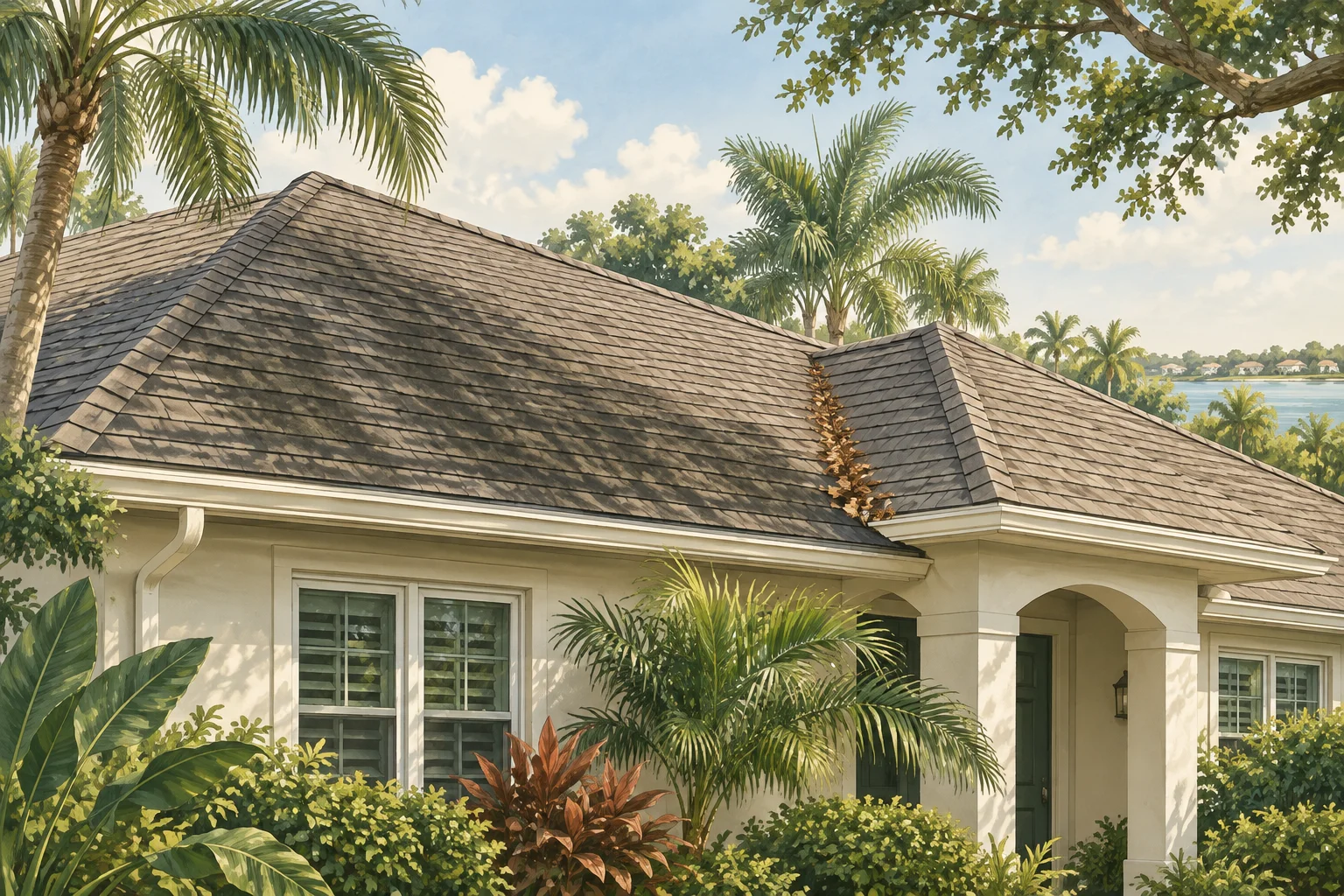
How do you know your roof needs cleaning?
Look for growing dark streaks, green surface growth or accumulating debris. Ask for a material-specific cleaning assessment if these changes appear. Leaks, missing shingles, sagging and visible damage need a roofer first. Make observations from the ground; do not climb onto the roof to investigate.
Six signs it is time to ask about roof cleaning
1. Dark streaks that are becoming more noticeable
Brown or black streaks on asphalt shingles can be algae discoloration rather than loose dirt. They may begin in patches and become easier to see over time. Compare photographs taken in similar light; a shaded roof will naturally look darker than the same roof in direct sun.
The Asphalt Roofing Manufacturers Association identifies algae as a cause of dark roof discoloration and notes its prevalence in warm, humid conditions. A cleaning assessment can help determine whether the staining is suitable for treatment. A photograph alone cannot diagnose every dark mark.
2. Green or fuzzy-looking growth
Green patches or raised growth deserve a closer professional look. Algae, moss and lichen are not interchangeable, and the treatment should be chosen for the actual growth and roofing material. Do not scrape, brush or pull growth off shingles to see what is underneath.
Describe whether the patch is flat, fuzzy or raised when you request a quote. If you can safely photograph it from the ground, include a close view using your phone's zoom. A contractor can tell you whether a cleaning visit or roofing evaluation should come first.
3. Leaves or small debris collecting in roof valleys
Look for leaves, twigs or other debris resting where roof slopes meet or beside nearby trees. Repeated accumulation is a reason to discuss roof and gutter maintenance. It may call for careful debris removal rather than a stain-removal treatment across the whole roof.
Note which areas collect debris and whether the pattern changes after wind or tree trimming. Ask whether debris removal is included in the cleaning quote. Do not assume gutter cleaning, roof washing and downspout clearing are the same service.
4. One area repeatedly stays stained
A patch beneath overhanging branches or near a roof transition may need attention sooner than the rest of the roof. If you keep noticing the same location, document it. Shade and surrounding vegetation are useful context, but persistent wetness or suspected drainage trouble also deserves evaluation.
Tell the contractor whether the stain changes when dry, whether it returns quickly after cleaning, and whether anything near that section has changed. Those observations help define the job more accurately than simply asking for the strongest possible wash.
5. Discoloration is affecting the appearance of the whole house
A roof occupies a large part of a home's visible exterior. If stains stand out even when the siding, driveway and landscaping look cared for, roof cleaning may be worth considering. The goal should be an appropriate improvement, not a promise that an aged roof will look newly installed.
Cleaning may suit a homeowner preparing for visitors, photographs or a sale, but it should follow a condition assessment. A cosmetic concern does not tell you how much service life remains in the roofing.
6. You cannot remember the last condition check
A long gap in maintenance is a reason to observe the roof and review its history—not an automatic reason to book a wash. Find the installation date, any previous cleaning invoice and the shingle or tile manufacturer's information if available.
If the roof looks clean and sound, more cleaning is not necessarily useful. If staining or debris has developed, those records help the contractor recommend an appropriate next step. Age and condition matter more than applying a fixed cleaning calendar to every property.
Does your roof need cleaning or a roofer?
The most important decision is whether you are looking at a surface-care issue or a roofing problem. Cleaning cannot replace damaged materials, seal a leak or correct sagging. Use the table below to organize what you see; it is a starting point for a conversation, not a diagnosis.
| What you notice | What to do next |
|---|---|
| Dark streaks with no obvious broken or missing roofing | Ask for a roof-cleaning assessment and identify the roof material. |
| Green, fuzzy or attached growth | Have the growth and roof condition assessed before choosing a removal method. |
| Leaves in a valley or gutter overflow | Discuss debris and gutter maintenance; persistent overflow may need drainage or gutter repair. |
| Missing, loose, curled or broken roofing | Contact a qualified roofer before cleaning. |
| An active leak, ceiling stain or sagging | Arrange prompt roofing assessment. Washing is not the remedy. |
| Bare-looking shingle patches or unusual granule accumulation | Ask a roofer to evaluate condition; cleaning cannot replace lost granules. |
| New damage after a storm | Prioritize a roofing assessment before cosmetic work. |
When in doubt, tell the cleaning company what concerns you before an appointment. A clear description allows the team to flag work that belongs with a roofer rather than treating every roof as ready to wash.
A simple roof check you can do from the ground
You do not need to climb onto the roof to start a useful maintenance conversation. Choose a dry day and a safe place on your property where you can see the roof. Stay clear of traffic, unstable ground and overhead hazards.
- Look at the whole roof first. Note which slopes are visible and whether any area appears different from the rest.
- Photograph the same viewpoints. Save a wide view of each visible side. Use zoom for details instead of a ladder.
- Record what you see. Write “black streak near the back tree” or “leaves in front valley” rather than guessing the cause.
- Check the surrounding area. Note overhanging vegetation, visible gutter overflow and where downspouts discharge.
- Collect the roof history. Include age, roofing material, past cleaning and any known leak or repair.
- Share the observations. Ask whether cleaning is appropriate and whether anything needs a roofer's attention first.
A ground-level check cannot establish that a roof is free of defects. Hidden areas, flashing and underlying components may need professional inspection. The purpose is to notice changes safely and provide useful information.
The benefits of appropriate roof cleaning
A cleaner, more cared-for exterior
Reducing suitable surface staining can improve how the roof looks and make the exterior feel more consistent with the rest of the property. This is often the most visible benefit. Normal weathering, repairs and material variations may remain after cleaning.
A treatment chosen for the actual problem
Identifying the stain or buildup allows the contractor to choose a material-appropriate method. Algae treatment, debris removal and roof repair are different tasks. A useful assessment helps you spend on the work the roof needs rather than an indiscriminate wash.
Less avoidable wear from an aggressive cleaning method
On asphalt shingles, a properly selected gentle process avoids the high-pressure scouring or brushing that can damage the surface. ARMA advises against power washing asphalt roofing and against brushing algae from shingles. Follow the roofing manufacturer's cleaning guidance.
Our soft wash vs. pressure washing guide explains that distinction in detail. Gentle application still requires suitable cleaning chemistry and careful workmanship.
A chance to organize ongoing maintenance
A cleaning consultation is an opportunity to discuss recurring stains, nearby trees, roof access and related debris work. Keeping the invoice, treatment description and photos makes the next maintenance decision easier. It also helps avoid repeated work based solely on guesswork.
Better expectations about your roof
A responsible service distinguishes appearance from condition. Cleaning does not add a guaranteed number of years to a roof, restore missing granules or automatically preserve a warranty. It also should not be sold as a guaranteed increase in property value or a specific reduction in energy bills. The useful benefit is appropriate care for the material you already have.

Why the cleaning method matters for shingles
Apple Roof Cleaning of Pasco & Pinellas uses a low-pressure chemical cleaning system for roof washing. The purpose is to address suitable staining with an appropriate solution rather than treating asphalt shingles like a concrete driveway.
Ask which roof manufacturer's guidance applies to your home, what cleaning method will be used and how nearby surfaces will be protected. A service described as “soft wash” still needs the right products, application and site preparation. The label alone is not a guarantee.
For tile, metal and other roof coverings, identify the material and any finish before choosing treatment. Cleaning instructions for asphalt shingles should not be transferred automatically to another roof type. If you do not know what material you have, mention that when requesting an estimate.
Learn more about our soft wash roof cleaning service and the information that helps us discuss your property.
How often should a Florida roof be cleaned?
There is no single interval that suits every roof in Pinellas or Pasco County. Material, age, exposure, staining and previous treatments vary from property to property. Use visible condition and the manufacturer's guidance to decide when to ask for a cleaning assessment.
Look periodically from the ground and compare photographs over time. Recheck after unusual debris accumulation or a storm, while remembering that storm damage calls for a roofing assessment. Do not automatically schedule frequent cleaning simply because a certain number of months has passed.
Algae discoloration may recur after treatment. ARMA makes clear that cleaning is not permanent prevention. If marks return quickly, ask for a review of the condition and surrounding factors rather than assuming another stronger application is the answer.
A professional can discuss an appropriate weather window and preparation. Rain, wind, roof access and the selected products influence scheduling. Follow the actual instructions for your property instead of a universal same-day promise.
What to ask before booking a roof cleaning
- Is my roof suitable for cleaning now? Explain known damage, leaks, age and previous repairs.
- What does the quote cover? Ask which slopes and stains are included and whether debris or gutter work is separate.
- What improvement is realistic? Discuss marks that may remain and whether follow-up is expected.
- How will the property be protected? Point out plants, pools, painted surfaces and rainwater collection.
- How will the crew access the roof? Access depends on the property; soft washing does not guarantee that no roof access is needed.
- What should I prepare? Ask about vehicles, outdoor furniture, pets and access to work areas.
- What care information will I receive? Keep a record of the treatment and any recommendations.
Cleaning solutions need careful handling even when applied at low pressure. Give the contractor enough information about the spaces below the roof to plan the work. The best quote describes the scope and process clearly, not just the square footage.
Roof cleaning help in Pasco and Pinellas Counties
If you have noticed roof streaks in Clearwater, dark patches in Seminole or recurring buildup around your home in St. Petersburg, Apple Roof Cleaning can discuss the next step. We serve homeowners across Pasco and Pinellas; check our service areas and include your property address when contacting us.
Send the roof type if known, an approximate age, a description of the staining and any known condition concerns. Mention if you have photos available. A wide view and a close-up taken safely from the ground can make the conversation more useful.
Request a free roof-cleaning quote or call (727) 277-2524. For more preparation advice, read our roof cleaning guide. Caring for the rest of your exterior? Explore our paver maintenance guide as well.
Roof-cleaning questions homeowners ask
Do black streaks mean I need a new roof?
Not necessarily. Algae can cause dark discoloration, but appearance alone cannot establish the roof’s condition. Have the staining assessed and tell the contractor about any leaks or damaged materials.
Can I check my roof without climbing up?
Yes. Observe from a safe ground-level location and take zoomed photographs. This helps document visible changes, but it does not replace a professional roof inspection.
Should I pressure wash roof stains myself?
Do not power wash asphalt shingles to remove algae. ARMA advises against high-pressure cleaning and abrasive brushing. Use professional assessment and the roofing manufacturer’s care guidance.
Will roof cleaning remove every mark?
Not always. Treatment may improve suitable staining, but weathering, past repairs and material damage can remain visible. Ask about likely results before booking.
Does a clean-looking roof mean it is in good condition?
No. A clean appearance does not rule out leaks, aging or hidden defects. Roofing condition and surface cleanliness are separate questions.
When should I call a roofer instead of a roof cleaner?
Arrange roofing assessment for active leaks, sagging, missing or broken roofing, loose shingles or suspected storm damage. Cleaning cannot repair those issues.
Technical reference: ARMA: Algae Discoloration of Roofs (June 6, 2024). Follow your specific roofing manufacturer’s instructions. This guide provides general homeowner information, not a diagnosis of your roof.